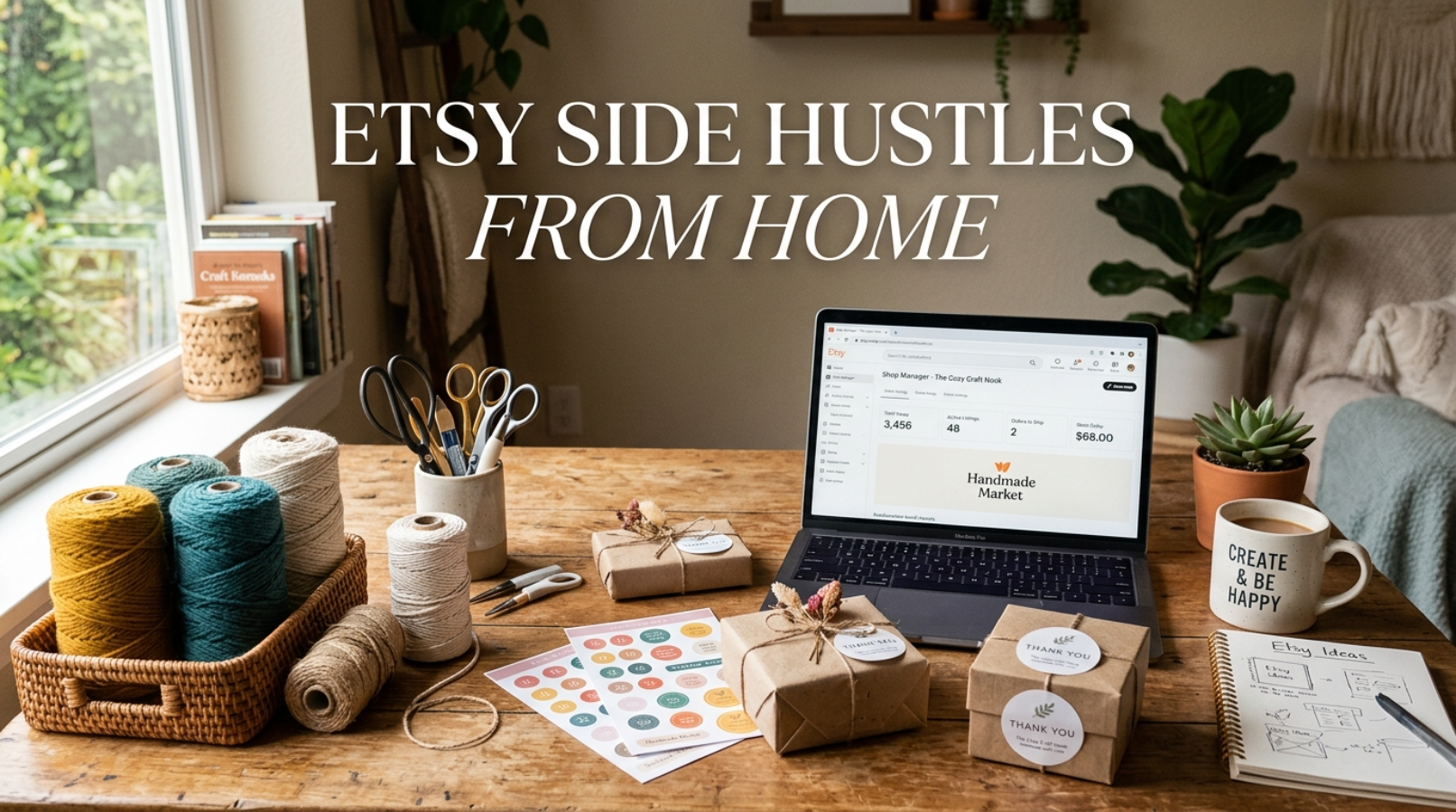
Etsy side hustles from home offer a flexible way to earn extra money without leaving your house. If your paycheck feels stretched or you’re looking for a creative outlet that can grow into steady extra income, Etsy is one of the easiest places to begin. One great product can continue bringing in sales long after you publish it.
Our site also includes a handy Copy Button that lets you instantly copy and share your favorite tip with one click. Save useful ideas for your own Etsy journey or send them to a friend planning to open an online shop. Furthermore, keeping your best tips organized makes every new listing easier to create.
What Are Etsy Side Hustles From Home?
Etsy Side Hustles From Home Explained
Etsy side hustles from home involve creating or sourcing products that customers purchase through your Etsy shop.
Many sellers offer digital downloads, handmade crafts, personalized gifts, printable planners, home décor, stickers, jewelry, and wedding supplies. Consequently, you can choose a niche that matches your interests and available time.
Unlike many traditional side jobs, Etsy allows you to build a catalog of products that can continue generating sales while you focus on creating new items.
Some popular Etsy side hustle ideas include:
- Printable planners
- Digital wall art
- Budget templates
- Wedding invitations
- Personalized gifts
- Handmade candles
- Crochet products
- Vinyl decals
- Greeting cards
- Digital journals
- Baby milestone cards
- Holiday decorations
The best products usually solve everyday problems or celebrate meaningful moments.
Why Etsy Side Hustles From Home Are Popular in 2026
More people are shopping online for personalized and unique products than ever before.
Likewise, digital products have become increasingly attractive because buyers receive them instantly, while sellers avoid inventory and shipping for downloadable items.
Here are several reasons Etsy remains popular:
- Flexible working hours
- Low startup costs
- Worldwide customer reach
- Opportunity to build a recognizable brand
- Ability to sell physical and digital products
- Shop management from home
Furthermore, adding new listings regularly helps your shop appear in more customer searches over time.
What You Need to Start
Starting an Etsy side hustle doesn’t require a huge investment.
Most beginners already own many of the basic tools needed to launch their first products.
Essential Tools
You’ll typically need:
- A laptop or desktop computer
- Reliable internet connection
- An Etsy seller account
- Design software for digital products
- Good product photos or mockups
- A payment method for shop fees
If you plan to sell handmade items, you’ll also need supplies related to your chosen niche.
Helpful Skills
You don’t need to be an expert to succeed.
Helpful skills include:
- Basic design
- Creative thinking
- Product photography
- Simple writing
- Customer service
- Organization
- Time management
These skills improve naturally as you continue creating and selling.
Startup Budget
Many Etsy shops begin with a modest budget.
Digital products usually require fewer upfront costs than physical products because there’s no inventory to purchase or store. Handmade products may require basic materials, but starting with a small collection keeps expenses manageable.
Choose One Niche First
Avoid selling every product idea during your first month.
Instead, focus on one category like printable planners, personalized gifts, wedding templates, home décor, or digital artwork. A focused shop builds trust with customers and makes future product planning much easier.
Step-by-Step Guide to Build Your Etsy Side Hustle
Starting an Etsy shop feels much less overwhelming when you follow a simple process. Focus on creating products that solve real problems instead of chasing every trend.
Step 1: Research Products People Already Buy
Spend time browsing successful Etsy shops in your niche.
Read customer reviews carefully because buyers often mention features they love and improvements they wish sellers offered. Consequently, these reviews become free product research.
Step 2: Create a High-Quality Product
Design something useful, attractive, and easy to understand.
Simple products often outperform overly complicated ones. I once spent hours adding fancy decorations to a printable planner, only to realize buyers preferred the cleaner version because it printed better.
Step 3: Take Great Photos or Create Mockups
Customers can’t touch your product before buying.
Professional images build trust immediately. Similarly, showing multiple angles or lifestyle mockups helps shoppers picture how they’ll use the product.
Step 4: Write a Helpful Listing
Your description should answer common questions before customers ask.
Include product details, dimensions, file types, colors, printing instructions, shipping information, and personalization options when applicable.
Step 5: Publish and Optimize Your Shop
Upload your products with clear titles and organized categories.
Furthermore, create matching collections so visitors can browse related items without searching through your entire shop.
Step 6: Keep Adding New Products
One listing rarely builds a successful shop.
Adding quality products every week gradually increases your visibility and creates more opportunities for customers to discover your store.
Realistic Earning Range
Income depends on product quality, niche demand, pricing, consistency, and customer service.
Typical monthly earnings may look like this:
| Experience Level | Estimated Monthly Income |
|---|---|
| Beginner | $50–$300 |
| Growing Shop | $300–$1,500 |
| Established Shop | $1,500–$5,000+ |
These figures are realistic estimates rather than guarantees. Some shops grow quickly, while others need several months of steady effort before seeing consistent sales.
Common Beginner Mistakes and Why They Happen
Avoiding common mistakes saves both time and frustration.
Listing Too Few Products
A shop with only one or two listings has fewer chances to appear in customer searches.
Building a larger catalog gradually improves your visibility.
Ignoring Product Photos
Blurry or dark images reduce buyer confidence.
Clear, bright photos usually attract more clicks and encourage purchases.
Choosing an Overcrowded Niche
Competing directly with thousands of nearly identical products can make growth difficult.
Instead, focus on a smaller audience with specific needs.
Writing Weak Descriptions
Customers appreciate detailed product information.
Clear descriptions reduce confusion and lower the number of support messages.
Expecting Instant Results
Many sellers become discouraged after a few weeks.
Growing an Etsy shop takes patience, consistent publishing, and regular improvements based on customer feedback.
Pro Tips and Shortcuts
Small improvements often produce steady long-term growth.
Create Matching Product Collections
Offer coordinating products like planners, calendars, stickers, journals, and templates.
Collections encourage customers to purchase multiple items.
Refresh Older Listings
Update photos, descriptions, and keywords every few months.
Fresh listings often attract new shoppers.
Listen to Customer Feedback
Reviews provide valuable ideas for future products.
Happy customers frequently suggest features worth adding to your next design.
Stay Consistent
Publishing one or two quality listings each week builds momentum much faster than uploading dozens of products once and disappearing afterward.
Consistency usually beats short bursts of activity.
Frequently Asked Questions
Are Etsy side hustles from home good for beginners?
Yes. Many beginners start with simple digital products or handmade items and grow their shops over time. Focus on creating useful products and improving each new listing.
How much money can I realistically earn on Etsy?
Income varies based on your niche, product quality, pricing, and consistency. Some beginners earn a little extra spending money, while established shops can generate a much higher monthly income after building a strong product catalog.
What products sell well on Etsy?
Popular categories include printable planners, digital wall art, wedding templates, personalized gifts, stickers, journals, home décor, and handmade accessories. Products that solve everyday problems or celebrate special occasions often perform well.
Do I need to make physical products?
No. Many successful Etsy sellers focus entirely on digital downloads such as planners, templates, worksheets, calendars, and printable artwork. Digital products eliminate inventory management and shipping.
Conclusion
Etsy side hustles from home provide a practical way to earn extra income while working on your own schedule. By choosing a focused niche, creating high-quality products, and adding new listings consistently, you can build a shop that grows steadily over time.
Remember that success rarely happens overnight. Improving your products, listening to customer feedback, and publishing regularly will help your shop gain momentum naturally.
If you found a helpful tip, use our Copy Button to save or share it instantly. Keep your favorite ideas close, start creating your first Etsy product today, and enjoy building a side hustle one listing at a time.

Hi, I’m Adam Smith, a writer at Earnonic.com. I share practical insights on online earning, finance, technology, and business to help readers make smarter decisions and grow in the digital world.