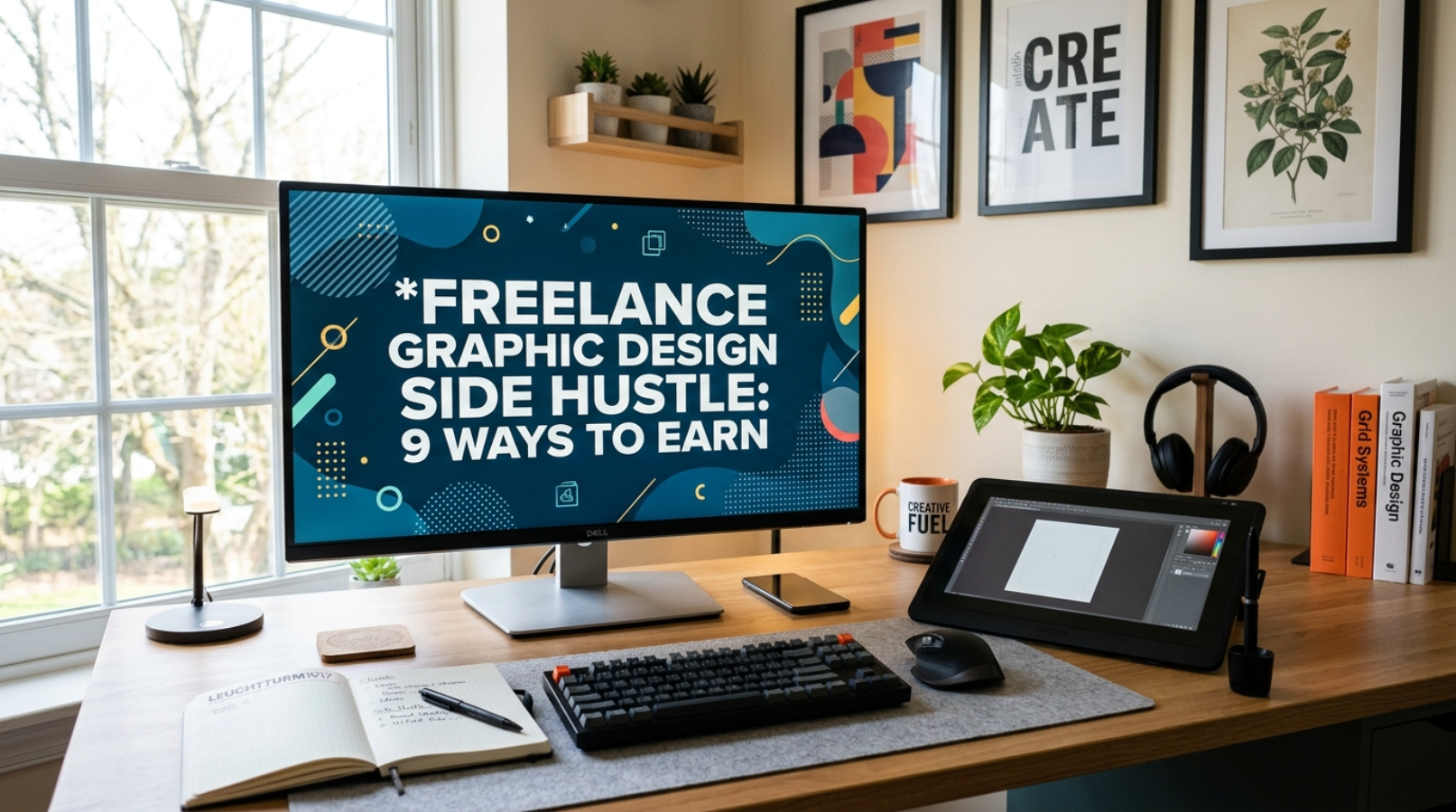
Freelance graphic design side hustle work can turn creative skills into a flexible source of extra income. You do not need a fancy agency, a downtown office, or a desk that costs more than your car.
With the right skills, a simple portfolio, and consistent client outreach, you can start taking on small design projects from home. Our site’s Copy Button also lets you instantly copy and share your favorite tip with one click, making it easy to save useful ideas for later.
What Is a Freelance Graphic Design Side Hustle?
A freelance graphic design side hustle involves creating visual materials for clients on a project basis. You might design logos, social graphics, presentations, advertisements, or marketing materials.
The work can fit around a full-time job or other responsibilities. Furthermore, you can start with small projects and gradually build toward larger client relationships.
Common Design Services
Popular services include:
- Logo design
- Social media graphics
- YouTube thumbnails
- Business flyers
- Presentation designs
- Digital advertisements
- Brand kits
- Product graphics
- Print materials
Naturally, beginners should avoid offering everything at once. Choosing a specific service makes your portfolio easier to understand.
Why Graphic Design Is a Useful Side Hustle in 2026
Businesses constantly need visual content. Small companies, creators, online stores, and local businesses often need professional-looking graphics without hiring a full-time designer.
Consequently, freelance designers can serve clients remotely and work on projects during evenings or weekends.
The biggest advantage is flexibility. You can accept a few projects at a time instead of immediately trying to build a full-time business.
What You Need to Get Started
Starting a design side hustle does not require a massive investment.
Essential Tools
You generally need:
- A reliable computer
- Stable internet
- Graphic design software
- Cloud storage
- Professional email
- Portfolio website or profile
- Payment method
Your equipment should support the type of work you plan to sell. For example, simple social graphics require less power than complex video or 3D projects.
Skills That Matter
Technical skills are important, but clients also care about communication and reliability.
You should understand basic layout, typography, spacing, color, image selection, and visual hierarchy. Additionally, learning how to follow a brand’s existing style can make you much more useful to clients.
9 Freelance Graphic Design Side Hustle Ideas
1. Logo Design
Small businesses often need logos for websites, social profiles, packaging, and marketing materials.
Create several sample concepts for imaginary businesses. This gives potential clients something concrete to review.
2. Social Media Graphics
Businesses need fresh visuals for platforms such as Instagram, Facebook, and LinkedIn.
You can offer individual graphics or small monthly packages. Consequently, recurring work may become easier to manage than constantly searching for one-off projects.
3. YouTube Thumbnails
Creators need attention-grabbing thumbnails that clearly communicate a video’s topic.
This service can suit designers who enjoy bold layouts and fast projects. It also gives you an easy portfolio category to build.
4. Presentation Design
Businesses frequently need polished presentations for meetings, sales pitches, training, and events.
A strong presentation designer understands more than decoration. Information needs to remain readable and organized.
5. Flyer Design
Local businesses still use flyers for events, promotions, openings, and community marketing.
This can be a straightforward service for beginners. Start by creating sample flyers for restaurants, gyms, salons, or local events.
6. Digital Ad Graphics
Online businesses need graphics for advertising campaigns.
Designers who understand attention, hierarchy, and concise messaging can become valuable to marketing teams. Furthermore, successful campaigns may lead to repeat assignments.
7. Brand Kits
A simple brand kit can include colors, fonts, logo variations, and basic visual guidelines.
This service usually requires more design knowledge than creating a single social post. However, it can become a useful upgrade for clients who already need logo work.
8. Product Graphics
E-commerce businesses need product images, promotional banners, comparison graphics, and feature highlights.
You can specialize in one type of product category and build relevant samples. That makes your portfolio feel more focused and credible.
9. Print Design
Menus, business cards, brochures, posters, and postcards still require careful design.
Print work also teaches important details such as dimensions, resolution, margins, and file preparation. Therefore, it can strengthen your overall design skills.
How to Get Your First Design Clients
Landing your first client can feel awkward. Sending your first pitch often feels like knocking on a stranger’s door while holding a portfolio and hoping nobody notices your nervousness.
Still, a simple process works better than random outreach.
Step 1: Pick One Service
Choose a service you can confidently deliver.
For example, focus on social media graphics instead of advertising yourself as a designer who does absolutely everything.
Step 2: Build a Small Portfolio
Create five to eight strong samples.
Use imaginary brands if necessary. Just make the projects realistic and clearly label personal concepts as samples.
Step 3: Find Potential Clients
Look for businesses with outdated graphics, inconsistent branding, or weak social content.
Then send personalized messages. Mention something specific about the business instead of copying the same pitch to 200 people.
Step 4: Offer a Clear Package
Clients should understand what they receive.
For example, a package might include five social graphics, two revisions, and final files.
Step 5: Deliver Professionally
Confirm deadlines and file formats before beginning.
Furthermore, organize your files clearly. Nobody enjoys receiving twelve files named “final-final-new2-reallyfinal.psd.”
How Much Can You Earn?
Freelance design income varies significantly. Your rates depend on experience, project complexity, niche, client budget, and turnaround time.
Beginners may start with smaller projects while building their portfolios. Experienced designers can charge more for specialized work and larger packages.
Instead of chasing a specific daily income target, track your actual time and project profitability.
For example, a project that pays $100 but takes seven hours may be less attractive than a $100 project that takes two hours.
Common Beginner Mistakes
Trying to Serve Everyone
A broad offer can make your portfolio look unfocused.
Instead, start with one or two services and expand later.
Underpricing Every Project
Low prices may help you land initial work, but they should not become permanent.
As your skills and portfolio improve, review your pricing regularly.
Skipping Client Questions
Unclear instructions create unnecessary revisions.
Before starting, confirm the deadline, dimensions, file type, number of concepts, and revision limits.
Copying Popular Designs
Inspiration is useful, but copying another designer’s work can create serious problems.
Build your own visual approach and use references only to understand direction.
Pro Tips for Growing Faster
Start with a niche that you understand. A designer who specializes in restaurant graphics, for example, can create a more convincing portfolio than someone targeting every industry.
Similarly, create reusable workflows for proposals, invoices, file delivery, and revisions. This reduces repetitive work and leaves more time for actual design.
Keep records of successful projects. Over time, your portfolio should become a collection of work that attracts the type of clients you actually want.
Most importantly, ask satisfied clients for testimonials. Real feedback can strengthen your credibility far more than vague claims about being “the best designer.”
FAQ
Can I start a graphic design side hustle with no agency experience?
Yes. You can build personal samples and begin with smaller projects. However, you still need enough design skill to deliver professional work.
What graphic design service is easiest for beginners?
Social media graphics, simple flyers, and thumbnails can be approachable starting points. Your best option depends on your existing skills.
Do I need expensive design equipment?
Not necessarily. A reliable computer and suitable design software are usually enough for many freelance projects.
Can graphic design become a full-time income?
It can, but results vary. Building repeat clients, improving your skills, and specializing can create stronger long-term opportunities.
Conclusion
A freelance graphic design side hustle can be a practical way to monetize creative skills without quitting your current job. Logo design, social graphics, thumbnails, presentations, and product graphics all offer potential starting points.
The smartest approach is to begin small. Pick one service, build a focused portfolio, contact relevant businesses, and improve your process after every project.
Save this guide and use the Copy Button to instantly copy and share your favorite idea. Then open your design software, create one sample, and see where that first project takes you.

Nick Loper is a content writer and side hustle specialist at Earnonic, where he shares practical strategies for online earning, freelancing, passive income, and small business growth. His articles focus on realistic, beginner-friendly advice that helps readers discover flexible income opportunities, build valuable skills, and make smarter financial decisions through actionable, research-backed content.