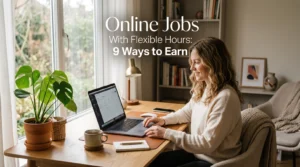
Passive side hustles with no experience can give beginners a practical way to build extra income without taking on another traditional job. The trick is choosing an idea that can keep working after the initial effort instead of demanding your attention every hour. Digital products, affiliate content, print-on-demand, and simple online resources are good examples. They still require work upfront, though. “Passive” does not mean effortless.
The smartest side hustle is one that fits your schedule instead of taking over your life.
Our Copy Button makes saving useful ideas much easier. You can instantly copy and share your favorite tip with one click, so you can keep a shortlist while deciding what fits your skills, budget, and free time. That little shortcut can save you from having 17 browser tabs open at midnight.
Side Hustle Ideas From Home
Side hustle ideas from home can range from freelancing and virtual assistance to digital products, tutoring, affiliate marketing, and online stores. The best choice depends on your skills, available time, and how quickly you want to start earning.
For beginners, starting with one simple idea is usually smarter than juggling five at once. Pick something you can realistically manage from your home, test it on a small scale, and improve it as you learn. This approach keeps your costs and workload under control while giving you a clearer picture of what can actually earn money.
Side Hustles That Pay Daily
Side hustles that pay daily can be useful when you need faster access to extra cash instead of waiting for a traditional weekly or monthly paycheck. Options include local services, delivery work, selling unused items, and certain freelance or gig platforms. However, “daily pay” often means same-day or next-day cash-out, not a guaranteed payment every day. (Whop)
For beginners, the simplest approach is to choose work you can complete quickly and get paid for soon after. Start with one option, check its payout rules carefully, and track your actual earnings after fees and expenses. Fast income is useful, but a reliable side hustle is even better.
What Are Passive Side Hustles With No Experience?
Passive side hustles are income projects designed to continue generating sales, commissions, or revenue after the initial work is completed. They often involve creating something once and selling or promoting it repeatedly.
For beginners, the most accessible options usually rely on simple digital skills. You do not need years of professional experience to start learning them.
Common examples include:
- Digital planners and templates
- Print-on-demand products
- Affiliate marketing
- Stock photos or graphics
- Downloadable guides
- Simple online courses
- Niche websites
- Printable worksheets
- Digital spreadsheets
- Membership resources
The important distinction is that these businesses can become more automated over time. They are not guaranteed income streams, and most take patience before producing meaningful results.
Why These Side Hustles Matter in 2026
Extra income has become more attractive for people dealing with rising everyday expenses and unpredictable work schedules. A side project can provide another source of revenue without requiring a second commute.
Furthermore, digital platforms make it easier for beginners to create, publish, and sell products from home. Many tasks can be completed using a basic computer and an internet connection.
However, convenience does not remove competition. A generic planner or random affiliate website rarely stands out on its own.
Instead, beginners can focus on a specific audience and solve one clear problem. A meal planner for busy college students, for example, has a clearer purpose than a generic “life planner.”
What You Need to Get Started
One advantage of beginner-friendly passive income ideas is the relatively low starting cost. You can often test an idea before investing heavily in software, advertising, or inventory.
Basic Tools
You may need:
- A computer or smartphone
- Reliable internet access
- A free or inexpensive design tool
- A payment platform
- A marketplace or website
- Basic spreadsheet software
- Time for research and testing
Your budget can stay small at first. In fact, spending hundreds of dollars before proving an idea has demand is one of the easiest ways to turn a side hustle into an expensive hobby.
Skills That Help
You do not need advanced technical knowledge. Basic writing, organization, research, design, communication, and problem-solving skills can take you surprisingly far.
Naturally, you can learn missing skills as you go. Start with one project instead of trying to master everything at once.
7 Passive Side Hustle Ideas for Beginners
1. Sell Digital Templates
Templates are among the simplest digital products to test. You could create budget sheets, calendars, checklists, resumes, social media planners, or business worksheets.
The product only needs to solve a specific problem clearly. A useful template can also be updated and improved after customers provide feedback.
2. Try Print-on-Demand
Print-on-demand lets you create designs for products such as shirts, mugs, notebooks, and posters. A third-party service handles production and shipping after a customer orders.
Consequently, you do not need to keep boxes of merchandise in your bedroom. That is especially helpful if your “warehouse” currently consists of one suspiciously crowded closet.
The challenge is creating designs people actually want. Niche-specific concepts often make more sense than generic slogans.
3. Build Affiliate Content
Affiliate marketing involves recommending products or services and earning a commission from qualifying purchases.
You can build content around a focused topic through a blog, social platform, newsletter, or video channel. Helpful comparisons, tutorials, and product guides tend to provide more value than simply posting links.
Naturally, trust matters. Recommend products you can explain honestly rather than chasing every commission opportunity.
4. Create Downloadable Guides
A short guide can package useful knowledge into a convenient resource. Examples include beginner checklists, meal-planning guides, travel planners, study resources, or budgeting worksheets.
You do not need to write a 200-page book. A focused guide that solves one problem can be more useful.
5. Sell Stock Photos or Graphics
If you enjoy photography, illustration, or graphic design, you can license your work through appropriate marketplaces.
The process requires an upfront collection of quality work. After publishing, individual assets may continue generating sales or licensing revenue.
Results vary widely, so treat this as a long-term library-building strategy rather than quick cash.
6. Create a Niche Website
A focused website can eventually generate income through advertising, affiliate partnerships, digital products, or other legitimate methods.
The hardest part is usually consistency. Search traffic takes time, and publishing dozens of random articles rarely creates a strong business.
Instead, choose a narrow subject you understand and build genuinely useful resources around it.
7. Make Simple Online Courses
If you know a practical skill, you can package it into a short course. Cooking basics, spreadsheet skills, photography fundamentals, crafts, and beginner fitness routines are examples.
Start small. A focused course with clear lessons is easier to create and improve than a massive program.
How to Start Your First Passive Income Project
The biggest beginner mistake is trying five ideas simultaneously. Instead, choose one concept and test it properly.
Step 1: Pick One Problem
Think about a specific audience and the problem you can help them solve.
For example, “budgeting” is broad. “A simple weekly budget tracker for college students” is much more specific.
Step 2: Research Existing Demand
Look at marketplaces, forums, social platforms, and search results. Notice recurring questions, complaints, and product gaps.
Do not copy another seller’s product. Use research to understand what people need.
Step 3: Create a Small Version
Build the simplest useful version of your product. A five-page guide may be enough for your first test.
Similarly, one excellent template is better than 30 rushed ones.
Step 4: Publish and Test
Put your product or content in front of the right audience. Track clicks, views, sales, downloads, or other meaningful signals.
If people ignore it, investigate why. Sometimes the problem is the product. Other times, the title, presentation, audience, or pricing needs work.
Step 5: Improve Based on Results
Use real feedback instead of guessing. Improve descriptions, examples, layouts, titles, and product features.
Over time, this creates a more efficient income system.
How Much Can You Realistically Earn?
There is no universal income figure for passive side hustles. Earnings depend on the business model, audience, product quality, traffic, pricing, competition, and consistency.
A beginner might make nothing during the testing stage. Later, a useful product could produce occasional sales, while a stronger business might generate substantially more.
The key is to measure profit rather than revenue. Platform fees, software subscriptions, advertising costs, taxes, and refunds can reduce what you actually keep.
Consequently, treat early earnings as validation rather than a paycheck replacement.
Common Beginner Mistakes
Expecting Instant Passive Income
Many beginners hear “passive” and imagine money arriving while they sleep. The reality is less glamorous.
Most successful projects require research, creation, promotion, customer support, and regular improvements.
Choosing an Overcrowded Idea
Entering a broad market with a generic product makes it harder to stand out.
Instead, narrow the audience and solve a specific problem.
Spending Too Much Too Soon
Paid tools can be useful, but beginners often buy subscriptions before making their first sale.
Start lean. Upgrade only when a tool clearly saves time or improves results.
Creating Without Testing Demand
A product can look fantastic and still fail to attract buyers.
Research the audience first, then create something that addresses an existing need.
Pro Tips to Make the Process Easier
Start with a problem you understand. Familiarity makes research and content creation much easier.
Build one product before creating ten. Your first project teaches you more than another hour of brainstorming.
Keep your costs visible. Track every subscription, platform fee, and marketing expense.
Reuse useful work. A guide can become a checklist, email series, worksheet, or social post.
Focus on usefulness first. People rarely care how clever your business model sounds. They care if your product saves time, reduces confusion, or solves a problem.
Finally, give the project enough time to produce meaningful feedback. Abandoning an idea after three days usually tells you very little.
FAQ About Passive Side Hustles With No Experience
Can I start a passive side hustle with no experience?
Yes. Beginner-friendly options include digital templates, print-on-demand, affiliate content, and downloadable resources. You will still need to learn basic skills and understand your target audience.
What is the easiest passive side hustle to start?
Digital products are often simple to test because they require no physical inventory. A useful template, checklist, or guide can be created with relatively little upfront expense.
Do passive side hustles require money?
Some can start with minimal costs. However, you may eventually pay for hosting, software, marketplace fees, payment processing, or marketing.
How long does passive income take to build?
There is no fixed timeline. Some projects may receive early sales, while others take months to gain traction. Consistent testing and improvement usually matter more than chasing a specific deadline.
Conclusion
Passive side hustles with no experience can provide a realistic starting point for building additional income, but they are not magic money machines. The strongest options usually begin with one useful product, one specific audience, and a willingness to improve.
Start small, keep expenses under control, and focus on solving a problem people actually have. Save this guide with the Copy Button, share your favorite idea, and pick one side hustle to test this week. Your future self may appreciate the extra income—and the slightly less stressful coffee budget.

Nick Loper is a content writer and side hustle specialist at Earnonic, where he shares practical strategies for online earning, freelancing, passive income, and small business growth. His articles focus on realistic, beginner-friendly advice that helps readers discover flexible income opportunities, build valuable skills, and make smarter financial decisions through actionable, research-backed content.